Showing posts with label NASA. Show all posts

Tuesday, July 11, 2017

Global Average Surface Temperature Data is Invalid

Staff Writer, DL Mullan
Climate Change / Science 
___________________________________
 
ABSTRACT
The objective of this research was to test the hypothesis that Global Average Surface Temperature (GAST) data, produced by NOAA, NASA, and HADLEY are sufficiently credible estimates of global average temperatures such that they can be relied upon for climate modeling and policy analysis purposes.The relevance of this research is that the validity of all three of the so-called Lines of Evidence in EPA’s GHG/CO2 Endangerment Finding require GAST data to be a valid representation of reality.

In this research report, the most important surface data adjustment issues are identified and past changes in the previously reported historical data are quantified. It was found that each new version of GAST has nearly always exhibited a steeper warming linear trend over its entire history. And, it was nearly always accomplished by systematically removing the previously existing cyclical temperature pattern. This was true for all three entities providing GAST data measurement, NOAA, NASA and Hadley CRU.

As a result, this research sought to validate the current estimates of GAST using the best available relevant data. This included the best documented and understood data sets from the U.S. and elsewhere as well as global data from satellites that provide far more extensive global coverage and are not contaminated by bad siting and urbanization impacts. Satellite data integrity also benefits from having cross checks with Balloon data.

The conclusive findings of this research are that the three GAST data sets are not a valid representation of reality. In fact, the magnitude of their historical data adjustments that removed their cyclical temperature patterns, are totally inconsistent with published and credible U.S. and other temperature data. Thus,it is impossible to conclude from the three published GAST data sets that recent years have been the warmest ever –despite current claims of record setting warming.

Finally, since GAST data set validity is a necessary condition for EPA’s GHG/CO2Endangerment Finding, it too is invalidated by these research findings. 

To read the entire paper, click our Source material.


Source: THS Research   

Tuesday, June 28, 2016

Mars was like Earth Once

Staff Writer, Nathaniel Diaz 
Mars / NASA 
_____________________________________

In the Geophysical Research Letters, Oxidation of manganese in an ancient aquifer, Kimberley formation, Gale crater, Mars makes the argument that Mars used to be very much like Earth at one time in its past. 

Abstract:

The Curiosity rover observed high-Mn abundances (>25 wt% MnO) in fracture-filling materials that crosscut sandstones in the Kimberley region of Gale crater, Mars. The correlation between Mn and trace metal abundances plus the lack of correlation between Mn and elements such as S, Cl, and C, reveals that these deposits are Mn-oxides rather than evaporites or other salts. On Earth, environments that concentrate Mn and deposit Mn minerals require water and highly oxidizing conditions, hence these findings suggest that similar processes occurred on Mars. Based on the strong association between Mn-oxide deposition and evolving atmospheric dioxygen levels on Earth, the presence of these Mn-phases on Mars suggests that there was more abundant molecular oxygen within the atmosphere and some groundwaters of ancient Mars than in the present day.
To read the full article, please visit the source document.


Source: AGU Publications

Monday, November 2, 2015

The Beast Side with D. Watkins and the Clinton’s War on Women with Roger Stone

Staff Writer, DB Holmes
Clintons / News 
___________________________________


On this episode of “Watching the Hawks” Tyrel Ventura & Tabetha Wallace interview author D. Watkins about his new book “The Beast Side” and what it is like to live and die while black in America. The team covers Sesame Street’s new character, a little girl named Julia with autism. Roger Stone joins the team to discuss his book “The Clinton’s War on Women” and the GOP Presidential Campaign. The show closes with a look at a remarkable discovery of oxygen on comet 67P which might indicate our solar system is older than previously thought.

Source: Watching the Hawks

Wednesday, September 23, 2015

Faking the Moon Landing – Stanley Kubrick & NASA’s Noble Lie with Bart Sibrel

Staff Writer, DB Holmes
Government / NASA 
______________________________________


Was the moon landing faked by NASA and Stanley Kubrick in an effort to cover up the failure to execute John F. Kennedy’s bold desire to have a man on the moon before the end of the 1960s? We discuss the theory with Bart Sibrel, who shares unedited NASA footage of the mission, and explains the reasons why the lunar landing was not possible in this uncensored Buzzsaw interview hosted by Sean Stone.

Source: Buzzsaw

Wednesday, August 26, 2015

Urban Heat Islands

Staff Writer, Nathaniel Diaz
Weather / Thermal Imaging
___________________________________

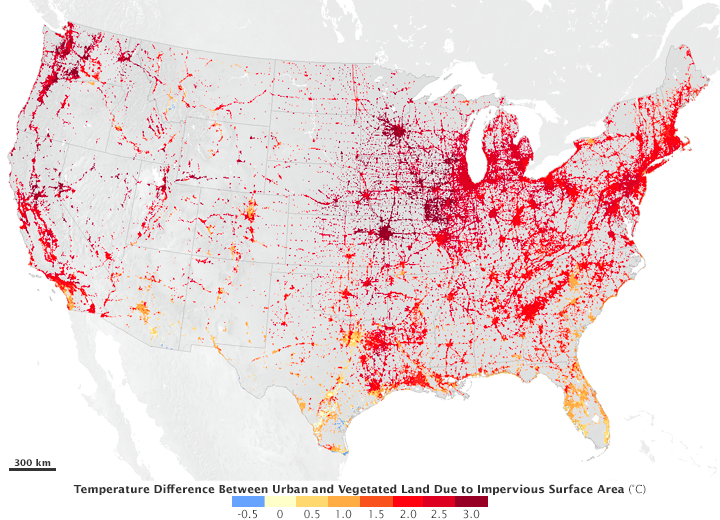
When weather forecasters mention your city's heat island, do you just get the idea of one locale? Here is what those Urban Heat Islands look like: 

The urban heat island effect occurs primarily during the day, when urban impervious surfaces absorb more sunlight than the surrounding vegetated areas. Trees, grasses, and other vegetation naturally cool the air as a by-product of photosynthesis. They release water back into to the atmosphere in a process called evapotranspiration, which cools the local surface temperature in much the same way that sweat cools a person’s skin as it evaporates. Trees with broad leaves, like those found in many deciduous forests on the U.S. East Coast, have more pores to exchange water than trees with needles, and so have more of a cooling effect.
Read the article carefully as there is climate scientist propaganda mixed within the actual science. 

Source: NASA

Tuesday, August 18, 2015

Want to Join Insignt on Its way to Mars?

Staff Writer, DL Mullan
Mars  / NASA
____________________________


Do you want to go to Mars but cannot make the trip?  NASA has a way to add your name to the Lander going there called Insight.
InSight (Interior Exploration using Seismic Investigations, Geodesy and Heat Transport) is a NASA Discovery Program mission that will place a single geophysical lander on Mars to study its deep interior.  
Mission Update: Send your name to the Red Planet aboard InSight

But InSight is more than a Mars mission - it is a terrestrial planet explorer that will address one of the most fundamental issues of planetary and solar system science - understanding the processes that shaped the rocky planets of the inner solar system (including Earth) more than four billion years ago.

By using sophisticated geophysical instruments, InSight will delve deep beneath the surface of Mars, detecting the fingerprints of the processes of terrestrial planet formation, as well as measuring the planet's "vital signs": Its "pulse" (seismology), "temperature" (heat flow probe), and "reflexes" (precision tracking).

Last Day to Register: September 8, 2015 (Midnight ET)

Source: NASA

Tuesday, January 20, 2015

Eclipses of 2015

Staff Writer, Nathaniel Diaz
Earth / Eclipses
_____________________________________

NASA Eclipse Website has this year's event schedule.


Source: NASA

Saturday, January 17, 2015

ISS Sightings Table for Phoenix Skywatchers

Staff Writer, Nathaniel Diaz
NASA / ISS
_____________________________________

The ISS can be viewed on these days this month: 


Source: NASA

Thursday, January 8, 2015

Eta Carinae Brought to LIfe by NASA

Staff Writer, Nathaniel Diaz
NASA /Astrophysics
____________________________________

NASA has set its sights on extrasolar suns and planets in the article, NASA Observatories Take an Unprecedented Look into Superstar Eta Carinae
"Changes in the X-rays are a direct probe of the collision zone and reflect changes in how these stars lose mass," said Michael Corcoran, an astrophysicist with the Universities Space Research Association headquartered in Columbia, Maryland. He and his colleagues compared periastron emission measured over the past 20 years by NASA's Rossi X-ray Timing Explorer, which ceased operation in 2012, and the X-ray Telescope aboard NASA's Swift satellite. In July 2014, as the stars rushed toward each other, Swift observed a series of flares culminating in the brightest X-ray emission yet seen from Eta Carinae. This implies a change in mass loss by one of the stars, but X-rays alone cannot determine which one.
Watch NASA's animation:

Eta Carinae is a binary system containing the most luminous and massive star within 10,000 light-years. A long-term study led by astronomers at NASA's Goddard Space Flight Center in Greenbelt, Maryland, combined data from NASA satellites, ground-based observing campaigns and theoretical modeling to produce the most comprehensive picture of Eta Carinae to date. New findings include Hubble Space Telescope images that show decade-old shells of ionized gas racing away from the largest star at a million miles an hour, and new 3-D models that reveal never-before-seen features of the stars' interactions.

Located about 7,500 light-years away in the southern constellation of Carina, Eta Carinae comprises two massive stars whose eccentric orbits bring them unusually close every 5.5 years. Both produce powerful gaseous outflows called stellar winds, which enshroud the stars and stymy efforts to directly measure their properties. Astronomers have established that the brighter, cooler primary star has about 90 times the mass of the sun and outshines it by 5 million times. While the properties of its smaller, hotter companion are more contested, Goddard's Ted Gull and his colleagues think the star has about 30 solar masses and emits a million times the sun's light.

At closest approach, or periastron, the stars are 140 million miles (225 million kilometers) apart, or about the average distance between Mars and the sun. Astronomers observe dramatic changes in the system during the months before and after periastron. These include X-ray flares, followed by a sudden decline and eventual recovery of X-ray emission; the disappearance and re-emergence of structures near the stars detected at specific wavelengths of visible light; and even a play of light and shadow as the smaller star swings around the primary.

During the past 11 years, spanning three periastron passages, the Goddard group has developed a model based on routine observations of the stars using ground-based telescopes and multiple NASA satellites. According to this model, the interaction of the two stellar winds accounts for many of the periodic changes observed in the system. The winds from each star have markedly different properties: thick and slow for the primary, lean and fast for the hotter companion. The primary's wind blows at nearly 1 million mph and is especially dense, carrying away the equivalent mass of our sun every thousand years. By contrast, the companion's wind carries off about 100 times less material than the primary's, but it races outward as much as six times faster.

The images and video on this page include periastron observations from NASA's Rossi X-ray Timing Explorer, the X-Ray Telescope aboard NASA's Swift, the Hubble Space Telescope's STIS instrument, and computer simulations. See the captions for details.

This video is public domain and can be downloaded at: http://svs.gsfc.nasa.gov/goto?11725

Source: NASA, NASA Goddard

Tuesday, December 30, 2014

Dawn Spacecraft Begins Approach to Dwarf Planet Ceres

Staff Writer, Nathaniel Diaz
Dawn / NASA 
_____________________________


As Dawn journeys across our solar system, the spacecraft will unearth the mysteries of more asteroids and a dwarf planet:
"Orbiting both Vesta and Ceres would be truly impossible with conventional propulsion. Thanks to ion propulsion, we're about to make history as the first spaceship ever to orbit two unexplored alien worlds," said Marc Rayman, Dawn's chief engineer and mission director, based at NASA's Jet Propulsion Laboratory in Pasadena, California.
Thanks to this new ion propulsion system, we on Earth are in for a treat as Dawn investigates the beginnings of our space home. In fact May 9, 2015 is the date of NASA's Ceres Celebration. 

For more information, pictures, and research, visit: Dawn.


Source: NASA

Monday, December 29, 2014

Russian Scientists ‘Map’ Water Vapour in Martian Atmosphere

Staff Writer, Nathaniel Diaz
Solar System / Water Vapor
____________________________________

Water is not native to Earth. Mars has water vapor in its atmosphere: 

Russian scientists from the Space Research Institute of the Russian Academy of Sciences and the Moscow Institute of Physics and Technology (MIPT), together with their French and American colleagues, have created a “map” of the distribution of water vapour in Mars’ atmosphere. Their research includes observations of seasonal variations in atmospheric concentrations using data collected over ten years by the Russian-French SPICAM spectrometer aboard the Mars Express orbiter. This is the longest period of observation and provides the largest volume of data about water vapour on Mars.
Source: MIPT

Tuesday, October 28, 2014

NASA Supply Rocket Explodes Upon Lift Off

Staff Writer, Nathaniel Diaz
NASA / ISS / Rocket Explosion
_____________________________________

A catastrophic failure on the launchpad in Virgina happened this afternoon:
The Antares rocket was carrying 4,483 pounds of equipment to the station including 1,360 pounds of food. The rocket held a Cyngus cargo logistics spacecraft that was to have orbited above the Earth and was set to dock with the ISS on Nov. 2. Orbital Sciences had said this was the first use of its upgraded Castor 30XL second stage motor, which enables greater lift capacity.
The damage was contained on that platform and surrounding area. No one was killed.

Orbital Sciences, which has offices in Chandler, AZ, had this to say:
“It is far too early to know the details of what happened,” Frank Culbertson, Orbital’s general manager of its Advanced Programs Group, said in a statement. “We will conduct a thorough investigation immediately to determine the cause of this failure and what steps can be taken to avoid a repeat of this incident. As soon as we understand the cause we will begin the necessary work to return to flight to support our customers and the nation’s space program.”
Other supply lines are scheduled, but this accident cost nearly $2 billion in supplies and experiments. No details yet on the cost of the facility or rocket damage.


Source: ABC News

Monday, October 27, 2014

ICAS Report No. 10a November 1966

Staff Writer, Nathaniel Diaz
Weather Modification / Government
__________________________________


A Report to the Interdepartmental Committee for Atmospheric Sciences (ICAS) by Homer E. Newell – Associate Administrator for Space Science and Applications, NASA, Washington, D.C.
"At its meeting of March 29, 1966 the Fe~dr61 Council askel ICAS
to prepare a report outlining "who is doing what in weather
modification, the future plans of the agencies (particularly
Commerce and Interior) and their interrelationships, and the
considerations that should affect decisions on the division of
responsibilities for research in weather modification."
Source: NASA

Sunday, October 26, 2014

A Recommended National Program In Weather Modification, July 1965

Staff Writer, Nathaniel Diaz
Weather Modification / Government
___________________________________

Another document this time from NASA.gov detailing weather modification in a government report.


A Report to the
Interdepartmental Committee for
Atmospheric Sciences
Homer E. Newell
bY
Associate Administrator for Space Science and Application
National Aeronautics Si Space Administration
Washington, D.C.
Interdepartmental Committee
for
Atmospheric Sciences

Source: NASA

Tuesday, June 17, 2014

ISS Visibility Chart for the End of June

Staff Writer, DB Holmes
ISS / Space 
_____________________________________

 Do you like seeing the ISS? Here is a visibility chart for Phoenix, AZ this week.


Source: Heavens Above 

Saturday, May 3, 2014

Stephen Crothers: The Black Hole, the Big Bang, and Modern Physics

Staff Writer, DB Holmes
Electric Universe / Black Holes
______________________________

There has been a deliberate suppression of scientific truth by the community of physicists and astronomers concerning the black hole and the big bang. I bring you free access to original papers in the hope that this fraud can be exposed and physics restored to a rational search for knowledge. The black hole has no foundation in theory whatsoever. Neither Newton's theory nor Einstein's theory predict it. In fact, both theories preclude it, contrary to what the relativists claim.

If there are scientific papers that show how the Big Bang and Black Hole theories are invalid, then why aren't we looking for what does explain our universe? Why keep supporting a science that explains nothing?

We need a new paradigm. A way to explain and solve the questions of our existence must be explored. The Electric Universe is one way of researching another angle to "established" science. 

Right now, this new paradigm is being suppressed by the government and other entities. If the new research was wrong, then seeing all the data, including the full beginning to end CME releases from the sun, would end that hypothesis immediately. That is not happening.

So is it a wonder why people want more freedom in the sciences? Less religious dogma and more ethical work? Or is science more about thought control instead of fact?

Isn't it about time science is no longer suppressed and humans can finally be free to ask questions and study our universe?


Source: EU2013, Stephen Crothers    

Thursday, April 24, 2014

Canada Quake, Ice, Spaceweather

Staff Writer, DL Mullan
Meteorology / Heliosphere
_________________________________


Articles below are featured in today's report.
Today's Featured Links:
Long Term Ice: http://www.sciencedirect.com/science/...
A NASA scientist is launching a one-to-two-year pilot project this summer that takes advantage of U.S. high-voltage power transmission lines to measure a phenomenon that has caused widespread power outages in the past.

Read more at: http://phys.org/news/2014-04-first-of-its-kind-nasa-space-weather.html#jCp

Heliophysicist Antti Pulkkinen of NASA's Goddard Space Flight Center in Greenbelt, Md. and his team are installing scientific substations beneath high-voltage power transmission lines operated by Virginia's Dominion Virginia Power this summer to measure in real-time a phenomenon known as geomagnetically induced currents (GICs). "This is the first time we have used the U.S. high-voltage power transmission system as a science tool to map large-scale GICs," Pulkkinen said. "This application will allow unprecedented, game-changing data gathering over a wide range of spatial and temporal scales."

Read more at: http://phys.org/news/2014-04-first-of-its-kind-nasa-space-weather.html#jCp
A NASA scientist is launching a one-to-two-year pilot project this summer that takes advantage of U.S. high-voltage power transmission lines to measure a phenomenon that has caused widespread power outages in the past.

Read more at: http://phys.org/news/2014-04-first-of-its-kind-nasa-space-weather.html#jCp
A NASA scientist is launching a one-to-two-year pilot project this summer that takes advantage of U.S. high-voltage power transmission lines to measure a phenomenon that has caused widespread power outages in the past.

Read more at: http://phys.org/news/2014-04-first-of-its-kind-nasa-space-weather.html#jCp
Heliophysicist Antti Pulkkinen of NASA's Goddard Space Flight Center in Greenbelt, Md. and his team are installing scientific substations beneath high-voltage power transmission lines operated by Virginia's Dominion Virginia Power this summer to measure in real-time a phenomenon known as geomagnetically induced currents (GICs). "This is the first time we have used the U.S. high-voltage power transmission system as a science tool to map large-scale GICs," Pulkkinen said. "This application will allow unprecedented, game-changing data gathering over a wide range of spatial and temporal scales."

GIC Monitoring: http://phys.org/news/2014-04-first-of... 
A NASA scientist is launching a one-to-two-year pilot project this summer that takes advantage of U.S. high-voltage power transmission lines to measure a phenomenon that has caused widespread power outages in the past.

Great Lakes Ice: http://earthobservatory.nasa.gov/IOTD...
In the early afternoon on April 20, 2014, the Moderate Resolution Imaging Spectroradiometer (MODIS) on NASA’s Aqua satellite captured this natural-color image of Lake Superior, which straddles the United States–Canada border. At the time Aqua passed over, the lake was 63.5 percent ice covered, according to the NOAA Great Lakes Environmental Research Lab (GLERL). Averaged across Lake Superior, ice was 22.6 centimeters (8.9 inches) thick; it was as much as twice that thickness in some locations.


Source: Suspicious Observers

Thursday, April 17, 2014

NASA ISEE, Weather/Spaceweather Report

Staff Writer, DB Holmes
Meteorology / Heliosphere
_____________________________________


Springtime is here. The equinox has changed the game and the polar vortex is in the southern hemisphere over the Antarctic. New storms forming over the oceans and the sun is showing more activity with minor but increasing complexities.


Source: Youtube 

Saturday, April 12, 2014

Ghost Hunters Should Investigate Luminary on Mars

Staff Writer, DL Mullan
Curiosity / NASA
__________________________________

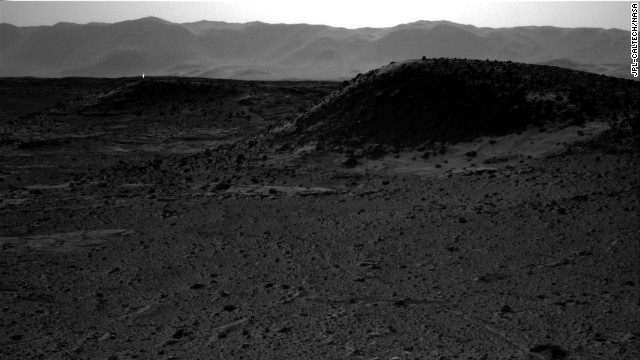
There have been some freaky images coming from NASA's Rover, Curiosity, over the last few months. First it was an overturned rock, now it's a shiny but distant optical illusion. 

Mars has become more than a planet of mystery; it's become the next reality show.

Everyone seems intrigued with the images. Some want alien life to exist. Some want Ghost Hunters to investigate. Some are curious as to why the rover is hitting so many jackpots.

I voted for number two. 

NASA had this statement about the shiny object: 
A few pictures -- taken April 2 and 3 -- show the bright spots. These were taken with the rover's "right-eye camera," yet others that were shot within a second from the "left-eye" camera don't show the same, explains Guy Webster, a spokesman with NASA's Jet Propulsion Laboratory.

Hence, it's unlikely any being -- from whatever world -- caused them.

Each time, "the sun was in the same direction as the bright spot -- west-northwest from the rover -- and relatively low in the sky," said Webster. That could lead one to believe that sun was reflecting off the rock the same way each time.
Too bad the shiny object may only be a rock or cosmic ray, I really wanted Ghost Hunters to investigate. It would be interesting that other worldly entities visit the other planets in the solar system besides ours. In closets and under the bed must be boring for energy beings by now.

Well, a reality show on Mars would be fascinating to see.


Source: CNN

Monday, January 20, 2014

Mars Attacks! Oh, Nevermind, It's Just a Rock

Staff Writer, DL Mullan
Mars Rovers / NASA
______________________________

"A comparison of two raw Pancam photographs from sols 3528 and 3540 of Opportunity's mission (a sol is a Martian day). Notice the "jelly doughnut"-sized rock in the center of the photograph to the right. Minor adjustments for brightness and contrast."

Credit: NASA/JPL-Caltech

"It's about the size of a jelly doughnut," NASA Mars Exploration Rover lead scientist Steve Squyres of Cornell University at a special NASA Jet Propulsion Laboratory told Discovery News. "It was a total surprise, we were like 'wait a second, that wasn't there before, it can't be right. Oh my god! It wasn't there before!’ We were absolutely startled."
Well it looks as if NASA has an alien prankster on Mars, or the Rover, Opportunity, flipped a rock and it landed onto top of this other rock during maneuvers. Either way, NASA scientists are excited about the find:
“It obligingly turned upside down, so we’re seeing a side that hasn’t seen the Martian atmosphere in billions of years and there it is for us to investigate. It’s just a stroke of luck.”  
“You think of Mars as being a very static place and I don’t think there’s a smoking hole nearby so it’s not a bit of crater ejecta, I think it’s something that we did … we flung it.”
These little robots sent to Mars has given the people on the Earth the opportunity to see beyond our little blue planet. We are getting to experience life on another planet. 

A brief history of the rover program: 
Opportunity has outlived its 3-month primary missionby ten years, notching up nearly 23 miles on the odometer so far. Sister rover Spirit succumbed to the Martian elements in 2009 when it became stuck in a sand trap in Gusev Crater. Spirit’s mission was declared lost when it stopped transmitting in March 2010, likely drained of energy. Although Spirit had the rougher time on Mars and was the first to die, it was also a huge success, aiding our understanding of Mars' geological history and outliving its warranty by 5 years. But now it's just Opportunity and Mars' new arrival Curiosity that soldier on to reveal more than we ever dreamed about our neighboring Red Planet.
These rovers has given every child, and the child inside adults, dreams of other worlds. Dreams only more exploration can satiate. Dreams that will give way to more dreams and rovers.

Is a Mars colony next? Shouldn't we have already been there by now? Money wasted on wars and cronyism hasn't given Americans, or the rest of the world, what we hunger for: knowledge that lies in the undiscovered country of our universe. 

Let us be who we are. Let us strive. Let us explore.


Source: Space,