Showing posts with label astronomy. Show all posts

Tuesday, January 20, 2015

Eclipses of 2015

Staff Writer, Nathaniel Diaz
Earth / Eclipses
_____________________________________

NASA Eclipse Website has this year's event schedule.


Source: NASA

Tuesday, January 6, 2015

Comet Lovejoy Closest This Week

Staff Writer, Nathaniel Diaz
Space / Comet
_____________________________________

Get out your astronomical gear, binoculars and telescopes, Comet Lovejoy to be the brightest this week. According to Space.com's article, How to Spot Potentially Dazzling 'New Year's Comet', we are given a guide to finding our own vision of Comet Lovejoy:
Closest to Earth on Jan. 7

Gareth V. Williams, of the Smithsonian Astrophysical Observatory, calculated the comet's revised orbit based on 530 observed positions from July 1 (before the comet was discovered) through Dec. 4. He found that the comet will pass through the perihelion point of its orbit (its closest point to the sun) on Jan. 30, when it passes 119.9 million miles (193 million km) from the sun. However, the comet is expected to reach its closest point to Earth — a minimum of 43.6 million miles (70.2 million km) — on Jan. 7.

For this reason, assuming that the comet will continue to brighten at its current rate, I would suggest that Lovejoy will be at its brightest around Jan. 7, shining as bright as magnitude 4.6, thus making it one of the brightest comets located high in a dark sky since the unexpected outburst of Comet Holmes in October 2007. [101 Amazing Skywatcher Photos from 2014]

That's a bit brighter than Eta Ursae Minoris, the faintest of the four stars in the bowl of the Little Dipper. So, will you be able to glimpse the comet without any optical aid? The answer is simple: If you can see all four stars in the Little Dipper's bowl, you should be able to see the comet.
  Happy Hunting.


Source: Space.com

Sunday, October 19, 2014

Comet Siding Spring Visible This Evening

Staff Writer, Nathaniel Diaz
Astronomy /Astrophysics
____________________________________

The newly discovered comet, Siding Spring, will be observable tonight right after sunset by the planet Mars.

Or, you can watch via Slooh:
The Slooh Community Observatory will broadcast a double feature about Comet Siding Spring's close pass by Mars on Sunday (Oct. 19). The first Slooh webcast will start at 2:15 p.m. EDT (1815 GMT), and the second will begin at 8:30 p.m. EDT (0030 Oct. 20 GMT).

Source: Space,  

Sunday, August 10, 2014

Comet Siding Spring - Potential Interactions

Staff Writer, Nathaniel Diaz
Astronomy / Comets
__________________________________


A look into the future of the comet set to intercept Mars.


Source: Suspicious Observers

Comet Siding Spring - Introduction

Staff Writer, Nathaniel Diaz
Astronomy / Comets
__________________________________


All you wanted to know about the next comet to have a show in our solar system.


Source: Suspicious Observers

Monday, June 9, 2014

Skywatching Opportunities Bring Planets and Moon Rays

Staff Writer, DL Mullan
Astronomy / Stargazing
_______________________________

June is a bit quiet when it comes to stargazing events. However, every night Mercury, Jupiter, Mars, and Saturn can be seen as well as different modes of the Moon. In the morning hours close to dawn, Venus shines bright.
  • June 13 - Full Moon. The Moon will be directly opposite the Earth from the Sun and will be fully illuminated as seen from Earth. This phase occurs at 04:11 UTC. This full moon was known by early Native American tribes as the Full Strawberry Moon because it signaled the time of year to gather ripening fruit. It also coincides with the peak of the strawberry harvesting season. This moon has also been known as the Full Rose Moon and the Full Honey Moon.
  • June 21 - June Solstice. The June solstice occurs at 10:51 UTC. The North Pole of the earth will be tilted toward the Sun, which will have reached its northernmost position in the sky and will be directly over the Tropic of Cancer at 23.44 degrees north latitude. This is the first day of summer (summer solstice) in the Northern Hemisphere and the first day of winter (winter solstice) in the Southern Hemisphere.
  • June 27 - New Moon. The Moon will be directly between the Earth and the Sun and will not be visible from Earth. This phase occurs at 08:08 UTC. This is the best time of the month to observe faint objects such as galaxies and star clusters because there is no moonlight to interfere.


Source: Sea and Sky, AccuWeather, Weather Underground  

Saturday, May 17, 2014

A Beautiful Night to Sit and Watch the Planets

Staff Writer, DL Mullan
Astronomy / Stargazing
___________________________________

Tonight, the skies are clear for stargazing. 

In the early evening expect to see Mercury very close to the western horizon. Jupiter will set soon after as he trails Orion in the Constellation Gemini.

Mars and Saturn will dominate the sky for the rest of the evening until the waxing gibbous moon rises.

In the early morning hours, Venus will rise before the sun makes his appearance at dawn.  

8pm Skyline in Phoenix


Source: Weather Underground, AccuWeather

Monday, May 12, 2014

Mid and Late May Stargazing Events

Staff Writer, DB Holmes
Astronomy / Stargazing
__________________________________

May is full of great nights for skywatching:
Phoenix at 11pm.
May 14 – Full Moon, 3:16 a.m. The visible Moon is fully illuminated by direct sunlight. Though the Moon is only technically in this phase for a few seconds, it is considered “full” for the entire day of the event, and appears full for three days. May’s full Moon with be a “supermoon,” meaning it coincides with the Moon’s perigee, or closest point to the Earth, making it larger in appearance and causing exceptionally high tides.

May 18 – Moon at perigee (its closest point to the Earth), 8 a.m.

May 21 – Last Quarter Moon, 8:59 a.m. One-half of the Moon appears illuminated by direct sunlight while the illuminated part is decreasing.

May 25 – Mercury at greatest eastern elongation. A body in space is at elongation is when it reaches its farthest angle from the Sun, as viewed from Earth. This is the best time to view an inferior planet – one inside of the Earth’s orbit.

May 28 – New Moon, 2:40 p.m. The Moon is not illuminated by direct sunlight.

Source: Farmer's Almanac, Weather Underground, 

Monday, May 5, 2014

Cloudy at First, Then Patchy with Starlight

Staff Writer, Nathaniel Diaz 
Astronomy / Weather
_______________________________

Tonight, stargazing weather will be fair. Cloudy conditions will turn patchy as the night progresses. Those stargazers who are out when the clouds only obstruct 36% of the sky later on will see Mars followed by Saturn.


For skywatchers who caught a glimpse of a shiny planet after sundown, Mercury has come from the other side of the Sun and is now setting in the West close to the horizon.

Here's the Phoenix night sky for tonight as of 8pm:


Source: Weather Underground,  Accuweather 

Wednesday, April 30, 2014

Stargazing with Planets and a Crescent Moon

Staff Writer, DL Mullan
Astronomy / Stargazing
___________________________________

Tonight, the sky will be clear to view the coming summer sky. Orion sets early as will the waxing crescent moon.

Daily Stats: 
Moon 6:46 AM MST   8:50 PM MST     
Length of Visible Light 14h 22m
Length of Day
13h 29m

The visible planets this evening will be Jupiter, Mars, and Saturn with Venus rising a little before 4am.


Visibility:


Source: Weather Underground, Accuweather   

Tuesday, April 22, 2014

News, Weather, Spaceweather

Staff Writer, DL Mullan
Meteorology / Heliosphere
____________________________________


The sun has gone back to being relatively quiet, Mercury conjuncting with the Sun plus positive magnetics of the incoming corona holes may signify coming Earthquake activity, and Jack is spinning his wheels.


Source: Suspicious Observers 

Tuesday, April 8, 2014

Earth's Eclipse and Mars Opposition

Staff Writer, DL Mullan
Astronomy / Astrophysics
__________________________________

Even though the Earth cannot play host to an eclipse on Mars by going in between the Sun and Mars this evening, it is the same principle as our Moon interfering with our sunlight.

Tonight is one of those rare nights that the Earth and Mars are incredibly close. The red star in the Eastern to midheaven sky is Mars. 
Mars is bright now! It’s easy to see with the unaided eye from all parts of Earth – as bright as the sky’s brightest star. Mars is brighter than it’s been for six years, since December 2007.
And that's not all skywatchers: 
Quite literally, this is Mars’ day in the sun. Take advantage, for Mars won’t be returning to opposition again until May 22, 2016.

By the way, Mars is not precisely closest to Earth on April 8, the day of opposition. Our two worlds will be closest together on April 14. On that night, Mars and the star Spica will appear near the moon as the moon undergoes a total eclipse!
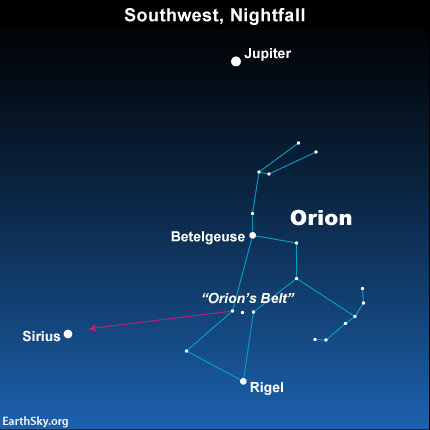
 
And to the West, view Orion, Spica, and Jupiter.

So break out those binoculars, telescopes, and dslr cameras, this one is for the history books. Well, at least your sky diary.


Source: EarthSky, 

Friday, November 22, 2013

Comets ISON and Erike Riding the Wave

Staff Writer, DL Mullan
Education / Astronomy
_______________________________

Comet ISON and Erike are making their way to the sun and NASA caught the two on STEREO.


 The comets' tails are riding the wave of the solar wind.

Source: NASA