Showing posts with label orion. Show all posts

Tuesday, January 6, 2015

Comet Lovejoy Closest This Week

Staff Writer, Nathaniel Diaz
Space / Comet
_____________________________________

Get out your astronomical gear, binoculars and telescopes, Comet Lovejoy to be the brightest this week. According to Space.com's article, How to Spot Potentially Dazzling 'New Year's Comet', we are given a guide to finding our own vision of Comet Lovejoy:
Closest to Earth on Jan. 7

Gareth V. Williams, of the Smithsonian Astrophysical Observatory, calculated the comet's revised orbit based on 530 observed positions from July 1 (before the comet was discovered) through Dec. 4. He found that the comet will pass through the perihelion point of its orbit (its closest point to the sun) on Jan. 30, when it passes 119.9 million miles (193 million km) from the sun. However, the comet is expected to reach its closest point to Earth — a minimum of 43.6 million miles (70.2 million km) — on Jan. 7.

For this reason, assuming that the comet will continue to brighten at its current rate, I would suggest that Lovejoy will be at its brightest around Jan. 7, shining as bright as magnitude 4.6, thus making it one of the brightest comets located high in a dark sky since the unexpected outburst of Comet Holmes in October 2007. [101 Amazing Skywatcher Photos from 2014]

That's a bit brighter than Eta Ursae Minoris, the faintest of the four stars in the bowl of the Little Dipper. So, will you be able to glimpse the comet without any optical aid? The answer is simple: If you can see all four stars in the Little Dipper's bowl, you should be able to see the comet.
  Happy Hunting.


Source: Space.com

Saturday, May 17, 2014

A Beautiful Night to Sit and Watch the Planets

Staff Writer, DL Mullan
Astronomy / Stargazing
___________________________________

Tonight, the skies are clear for stargazing. 

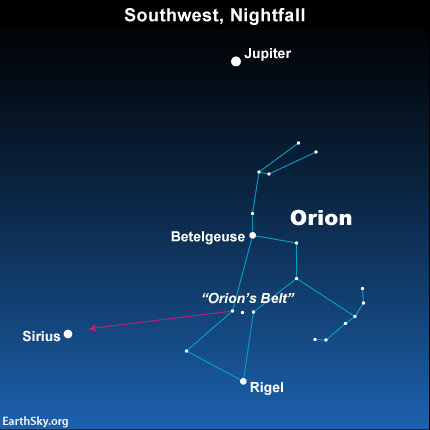
In the early evening expect to see Mercury very close to the western horizon. Jupiter will set soon after as he trails Orion in the Constellation Gemini.

Mars and Saturn will dominate the sky for the rest of the evening until the waxing gibbous moon rises.

In the early morning hours, Venus will rise before the sun makes his appearance at dawn.  

8pm Skyline in Phoenix


Source: Weather Underground, AccuWeather

Saturday, May 3, 2014

Stephen Crothers: The Black Hole, the Big Bang, and Modern Physics

Staff Writer, DB Holmes
Electric Universe / Black Holes
______________________________

There has been a deliberate suppression of scientific truth by the community of physicists and astronomers concerning the black hole and the big bang. I bring you free access to original papers in the hope that this fraud can be exposed and physics restored to a rational search for knowledge. The black hole has no foundation in theory whatsoever. Neither Newton's theory nor Einstein's theory predict it. In fact, both theories preclude it, contrary to what the relativists claim.

If there are scientific papers that show how the Big Bang and Black Hole theories are invalid, then why aren't we looking for what does explain our universe? Why keep supporting a science that explains nothing?

We need a new paradigm. A way to explain and solve the questions of our existence must be explored. The Electric Universe is one way of researching another angle to "established" science. 

Right now, this new paradigm is being suppressed by the government and other entities. If the new research was wrong, then seeing all the data, including the full beginning to end CME releases from the sun, would end that hypothesis immediately. That is not happening.

So is it a wonder why people want more freedom in the sciences? Less religious dogma and more ethical work? Or is science more about thought control instead of fact?

Isn't it about time science is no longer suppressed and humans can finally be free to ask questions and study our universe?


Source: EU2013, Stephen Crothers    

Tuesday, April 15, 2014

Lunar Shadow Dancing: April's Total Eclipse Highlights

Staff Writer, DL Mullan
Photographer, DL Mullan
Lunar Eclipse / Astrophotography
____________________________________

Just in case you missed the total lunar eclipse, here are some highlights:

The Moon enters the Earth's penumbra.

Slowly the Moon is covered in darkness.
Halfway to Totality.


The moon remained red and in the Earth's shadow for over an hour. A very impressive evening watching the movement of the planet and her satellite.

Mars was the closest to Earth for the entire year tonight and during the total eclipse was brighter than the moon. Spica even got in some sparkle time while the brightness of the moon was veiled. Saturn pulled up the rear as he traveled through the elliptical plane around the sun.

  
Refracted Light is about to Disappear.
Jupiter and Orion had already set for the evening before the Moon went into the Earth's shadow. 

A very good night for skywatchers.

Tuesday, April 8, 2014

Earth's Eclipse and Mars Opposition

Staff Writer, DL Mullan
Astronomy / Astrophysics
__________________________________

Even though the Earth cannot play host to an eclipse on Mars by going in between the Sun and Mars this evening, it is the same principle as our Moon interfering with our sunlight.

Tonight is one of those rare nights that the Earth and Mars are incredibly close. The red star in the Eastern to midheaven sky is Mars. 
Mars is bright now! It’s easy to see with the unaided eye from all parts of Earth – as bright as the sky’s brightest star. Mars is brighter than it’s been for six years, since December 2007.
And that's not all skywatchers: 
Quite literally, this is Mars’ day in the sun. Take advantage, for Mars won’t be returning to opposition again until May 22, 2016.

By the way, Mars is not precisely closest to Earth on April 8, the day of opposition. Our two worlds will be closest together on April 14. On that night, Mars and the star Spica will appear near the moon as the moon undergoes a total eclipse!
 
And to the West, view Orion, Spica, and Jupiter.

So break out those binoculars, telescopes, and dslr cameras, this one is for the history books. Well, at least your sky diary.


Source: EarthSky, 

Friday, November 15, 2013

Sky View Nov 15-24, 2013

Staff Writer, DL Mullan
Environment
_______________________________________

A favorite activity for some VDP residents is to do a little stargazing and November 2013 will not disappoint.


In the evenings, Venus can be seen in the South, Southwestern sky as the Moon continues to get brighter until the Full Moon on November 18th and decreases through the Last Quarter on the 25th and New Moon on December 2nd.

The image above details how one can find the Comet ISON on the 24th. With a telescope or binoculars, this comet will be sure to be a crowd pleaser.

If you are up later in the evening, you will be sure to see the Seven Sisters overhead followed by Orion and then the bright Jupiter. Even with a pair of good binoculars, a viewer can see pinpricks of light shining around the aura of Jupiter, that would be his moons.

The next three mornings will show Mercury about 10 degrees above the horizon and will be at its apex on the 17th before sunrise.

So grab a sweater and your favorite apparatus... the sky is full of viewable goodies for the rest of this November.