Showing posts with label jupiter. Show all posts

Saturday, October 24, 2015

The Morning Sky is Alive

Staff Writer, Nathaniel Diaz
Astronomy / Skywatching
_________________________________

Jupiter, Venus, and Mars are all lining up in the morning sky. As Venus treks eastward, the planets draw closer to together throughout this month. 


Mercury is low by the horizon.

As for the last visible planet, Saturn sets in the early night's sky. So enjoy!


Monday, June 9, 2014

Skywatching Opportunities Bring Planets and Moon Rays

Staff Writer, DL Mullan
Astronomy / Stargazing
_______________________________

June is a bit quiet when it comes to stargazing events. However, every night Mercury, Jupiter, Mars, and Saturn can be seen as well as different modes of the Moon. In the morning hours close to dawn, Venus shines bright.
  • June 13 - Full Moon. The Moon will be directly opposite the Earth from the Sun and will be fully illuminated as seen from Earth. This phase occurs at 04:11 UTC. This full moon was known by early Native American tribes as the Full Strawberry Moon because it signaled the time of year to gather ripening fruit. It also coincides with the peak of the strawberry harvesting season. This moon has also been known as the Full Rose Moon and the Full Honey Moon.
  • June 21 - June Solstice. The June solstice occurs at 10:51 UTC. The North Pole of the earth will be tilted toward the Sun, which will have reached its northernmost position in the sky and will be directly over the Tropic of Cancer at 23.44 degrees north latitude. This is the first day of summer (summer solstice) in the Northern Hemisphere and the first day of winter (winter solstice) in the Southern Hemisphere.
  • June 27 - New Moon. The Moon will be directly between the Earth and the Sun and will not be visible from Earth. This phase occurs at 08:08 UTC. This is the best time of the month to observe faint objects such as galaxies and star clusters because there is no moonlight to interfere.


Source: Sea and Sky, AccuWeather, Weather Underground  

Tuesday, May 20, 2014

Solar Status Confirmation, Kreutz Comets

Staff Writer, Nathaniel Diaz
Meteorology / Heliosphere
____________________________________


The sun continues to weaken as storms across the world soften, except in the convergence zone of midsection of the United States. Lots of small comets hitting the sun and might predict a larger one due to enter our solar system in the next coming years. 

Since Comet ISON was disappointing, the hope of a new comet is exciting for skywatchers. 

Today's Featured Links:


Source: Suspicious Observers

Sunday, May 18, 2014

GMOs, Broken Records, Spaceweather

Staff Writer, Nathaniel Diaz
Meteorology / Heliosphere
______________________________________


Oregon is trying to remove harmful GMOs from their state. Pakistan's weather alerts are for the deadly and continual flooding in that region. The United States has drought and warm conditions in the southwest with some stormy convergences in the mid to east. Cold is the dominant force even for the current season but El Nino will reverse that by year's end.

Today's Featured Links:


Source: Suspicious Observers

Saturday, May 17, 2014

A Beautiful Night to Sit and Watch the Planets

Staff Writer, DL Mullan
Astronomy / Stargazing
___________________________________

Tonight, the skies are clear for stargazing. 

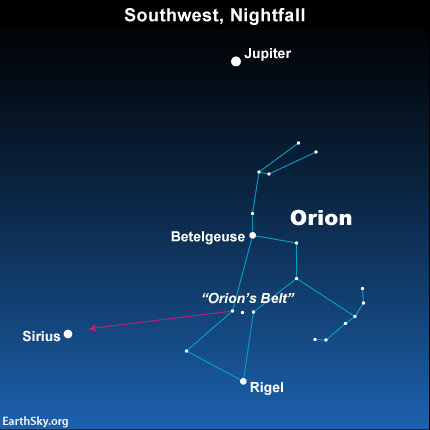
In the early evening expect to see Mercury very close to the western horizon. Jupiter will set soon after as he trails Orion in the Constellation Gemini.

Mars and Saturn will dominate the sky for the rest of the evening until the waxing gibbous moon rises.

In the early morning hours, Venus will rise before the sun makes his appearance at dawn.  

8pm Skyline in Phoenix


Source: Weather Underground, AccuWeather

Venus Express, Coronal Hole Power

Staff Writer, Nathaniel Diaz
Meteorology / Heliosphere
_____________________________________


Earthquakes rumble in chile. Venus is showing climate change through the ESA's atmospheric probe. El Nino is coming. Hang on to your everything; it could get stormy in late fall, winter. South of Mexico is still developing a low that could make a hurricane. Eastern Europe is seeing heavy rains due to a low over the land. 

The sun is going toward it's grand minimum. Coronal hole streams are quiet, but strengthening, and while CMEs are possible, just not strong.

Today's Featured Links:


Source: Suspicious Observers 

Friday, May 16, 2014

BICEP Error, Atlantic Currents, and Climate Science Mutiny Afoot

Staff Writer, Nathaniel Diaz
Meteorology / Helisophere
____________________________________


The Big Bang theory might be a fizzle as the BICEP results were less than stellar. The Gulf Coast and Atlantic Currents are slowing down due to natural variation and a solar output minimum. Southwest Pacific keeps getting rumbles and earthquakes. Jupiter has finally lost its storm eye. Watch for a strengthening on the west side of Mexico for a low pressure system ramp up into a hurricane. Another gamma burst was measured by Swift. 

Mostly, all is quiet in spaceweather, but the eastern United States should see some stormy weather. All quiet in the west as high pressure builds and temperatures rise in response. San Diego's wildfire fighters could see a little relief with some humidity with an off shore air flow.

Today's Featured Links:
More problems in the climate science world, again. Are we seeing the signs of a scientific mutiny? 
Scientists in cover-up of ‘damaging’ climate view

"Research which heaped doubt on the rate of global warming was deliberately suppressed by scientists because it was “less than helpful” to their cause, it was claimed last night. 
In an echo of the infamous “Climategate” scandal at the University of East Anglia, one of the world’s top academic journals rejected the work of five experts after a reviewer privately denounced it as “harmful”."

http://www.thetimes.co.uk/tto/science/article4091344.ece
Maybe it's time to give up this charade for real science.


Source: Suspicious Observers  

Wednesday, April 30, 2014

Stargazing with Planets and a Crescent Moon

Staff Writer, DL Mullan
Astronomy / Stargazing
___________________________________

Tonight, the sky will be clear to view the coming summer sky. Orion sets early as will the waxing crescent moon.

Daily Stats: 
Moon 6:46 AM MST   8:50 PM MST     
Length of Visible Light 14h 22m
Length of Day
13h 29m

The visible planets this evening will be Jupiter, Mars, and Saturn with Venus rising a little before 4am.


Visibility:


Source: Weather Underground, Accuweather   

Tuesday, April 15, 2014

Lunar Shadow Dancing: April's Total Eclipse Highlights

Staff Writer, DL Mullan
Photographer, DL Mullan
Lunar Eclipse / Astrophotography
____________________________________

Just in case you missed the total lunar eclipse, here are some highlights:

The Moon enters the Earth's penumbra.

Slowly the Moon is covered in darkness.
Halfway to Totality.


The moon remained red and in the Earth's shadow for over an hour. A very impressive evening watching the movement of the planet and her satellite.

Mars was the closest to Earth for the entire year tonight and during the total eclipse was brighter than the moon. Spica even got in some sparkle time while the brightness of the moon was veiled. Saturn pulled up the rear as he traveled through the elliptical plane around the sun.

  
Refracted Light is about to Disappear.
Jupiter and Orion had already set for the evening before the Moon went into the Earth's shadow. 

A very good night for skywatchers.

Tuesday, April 8, 2014

Earth's Eclipse and Mars Opposition

Staff Writer, DL Mullan
Astronomy / Astrophysics
__________________________________

Even though the Earth cannot play host to an eclipse on Mars by going in between the Sun and Mars this evening, it is the same principle as our Moon interfering with our sunlight.

Tonight is one of those rare nights that the Earth and Mars are incredibly close. The red star in the Eastern to midheaven sky is Mars. 
Mars is bright now! It’s easy to see with the unaided eye from all parts of Earth – as bright as the sky’s brightest star. Mars is brighter than it’s been for six years, since December 2007.
And that's not all skywatchers: 
Quite literally, this is Mars’ day in the sun. Take advantage, for Mars won’t be returning to opposition again until May 22, 2016.

By the way, Mars is not precisely closest to Earth on April 8, the day of opposition. Our two worlds will be closest together on April 14. On that night, Mars and the star Spica will appear near the moon as the moon undergoes a total eclipse!
 
And to the West, view Orion, Spica, and Jupiter.

So break out those binoculars, telescopes, and dslr cameras, this one is for the history books. Well, at least your sky diary.


Source: EarthSky, 

Friday, November 15, 2013

Sky View Nov 15-24, 2013

Staff Writer, DL Mullan
Environment
_______________________________________

A favorite activity for some VDP residents is to do a little stargazing and November 2013 will not disappoint.


In the evenings, Venus can be seen in the South, Southwestern sky as the Moon continues to get brighter until the Full Moon on November 18th and decreases through the Last Quarter on the 25th and New Moon on December 2nd.

The image above details how one can find the Comet ISON on the 24th. With a telescope or binoculars, this comet will be sure to be a crowd pleaser.

If you are up later in the evening, you will be sure to see the Seven Sisters overhead followed by Orion and then the bright Jupiter. Even with a pair of good binoculars, a viewer can see pinpricks of light shining around the aura of Jupiter, that would be his moons.

The next three mornings will show Mercury about 10 degrees above the horizon and will be at its apex on the 17th before sunrise.

So grab a sweater and your favorite apparatus... the sky is full of viewable goodies for the rest of this November.