Showing posts with label study. Show all posts

Wednesday, October 30, 2019

Potentiality of Virus Transmission through Vaccines

Staff Writer, DL Mullan
Vaccines / Virus Transmission
 ___________________________________

Investigating Viruses in Cells Used to Make Vaccines; and Evaluating the Potential Threat Posed by Transmission of Viruses to Humans

The emergence of pathogenic virus infections like influenza and HIV have created an urgent need for new vaccines.

Virus-based vaccines are made in living cells (cell substrates). Some manufacturers are investigating the use of new cell lines to make vaccines. The continual growth of cell lines ensures that there is a consistent supply of the same cells that can yield high quantities of the vaccine.

In some cases the cell lines that are used might be tumorigenic, that is, they form tumors when injected into rodents. Some of these tumor-forming cell lines may contain cancer-causing viruses that are not actively reproducing. Such viruses are hard to detect using standard methods. These latent, or "quiet," viruses pose a potential threat, since they might become active under vaccine manufacturing conditions. Therefore, to ensure the safety of vaccines, our laboratory is investigating ways to activate latent viruses in cell lines and to detect the activated viruses, as well as other unknown viruses, using new technologies. We will then adapt our findings to detect viruses in the same types of cell substrates that are used to produce vaccines. We are also trying to identify specific biological processes that reflect virus activity.

These methods will enable FDA scientists to help manufacturers to determine whether their specific cell substrate is safe to use for vaccine production. The methods our laboratory are developing and testing will help to ensure the production of safe and effective vaccines in two ways: 1) FDA will be able to develop testing guidelines for manufacturers who use new cell substrates for producing vaccines; and 2) FDA will publish the new methods it develops in peer-reviewed scientific journals, thus making them readily accessible to all manufacturers.

We are also evaluating the risk of retrovirus infections in humans. (Retroviruses are RNA viruses that use an enzyme called reverse transcriptase (RT) to replicate; RNA is the de-coded form of DNA). Simian foamy virus (SFV) can be transmitted from nonhuman primates (e.g., monkeys) to humans. Although there is no evidence that SFV causes disease, the virus can remain in a lifelong quiet state in the DNA after infection. Moreover, two individuals in Africa were recently found to be infected with both HIV-1 and SFV. Therefore, it is important to determine if SFV poses a threat to human health and to understand how the virus spreads in order to create strategies for controlling human infections. Such work will also help FDA to develop a new policy regarding blood donation by individuals working with nonhuman primates and implementing formal safety guidelines for people working with SFV-infected animals. We are also investigating the consequences of dual SFV and HIV-1 infection in the monkey model.


Source: FDA 

Friday, June 2, 2017

Study Finds Fake News Isn't Significant

Staff Writer, DL Mullan
Fake News / Study
________________________________

Social Media and Fake News in the 2016 Election states:
Conclusion
In the aftermath of the 2016 US presidential election, it was alleged that fake news might have been pivotal in the election of President Trump. We do not provide an assessment of this claim one way or another. 
That said, the new evidence we present clarifies the level of overall exposure to fake news, and it can give some sense of how persuasive fake news would need to have been to have been pivotal. We estimate that the average US adult read and
remembered on the order of one or perhaps several fake news articles during the election period, with higher exposure to pro-Trump articles than pro-Clinton articles. How much this affected the election results depends on the effectiveness of fake news exposure in changing the way people vote. As one benchmark, Spenkuch and Toniatti (2016) show that exposing voters to one additional television campaign ad changes vote hares by approximately 0.02 percentage points. This suggests that if one fake news article were about as persuasive as one TV campaign ad, the fake news in our database would have changed vote shares by an amount on the order of hundredths of a percentage point. This is much smaller than Trump’s margin of victory in the pivotal states on which the outcome depended. 
Of course there are many reasons why a single fake news story could have been more effective than a television commercial. If it were true that the Pope endorsed Donald Trump, this fact would be significantly more surprising—and probably move a rational voter’s beliefs by more as a result—than the information contained in a typical campaign ad. Moreover, as we emphasize above, there are many ways in which our estimates could understate true exposure. We only measure the number of stories read and remembered, and the excluded stories seen on news feeds but not read, or read but not remembered, could have had a large impact. Our fake news database is incomplete, and the effect of the stories it omits could also be significant. 
We also note that there are several ways in which this back-of-the-envelope calculation is conservative, in the sense that it could overstate the importance of fake news. We consider the number of stories voters read regardless of whether they believed them. We do not account for diminishing returns, which could reduce fake news’ effect to the extent that a small number of voters see a large number of stories. Also, this rough calculation does not explicitly take into account the fact
that a large share of pro-Trump fake news is seen by voters who are already predisposed to vote for Trump—the larger this selective exposure, the smaller the impact we would expect of fake news on vote shares.  
To the extent that fake news imposes social costs, what can and should be done? In theory, a social planner should want to address the market failures that lead to distortions, which would take the form of increasing information about the state of the world and increasing incentives for news consumers to infer the true state of the world. In practice, social media platforms and advertising networks have faced some pressure from consumers and civil society to reduce the prevalence of fake news on their systems. For example, both Facebook and Google are removing fake news sites Hunt Allcott and Matthew Gentzkow 233 from their advertising platforms on the grounds that they violate policies against misleading content (Wingfield, Isaac, and Benner 2016). Furthermore, Facebook has taken steps to identify fake news articles, flag false articles as “disputed by 3rd party fact-checkers,” show fewer potentially false articles in users’ news feeds, and  help users avoid accidentally sharing false articles by notifying them that a story is “disputed by 3rd parties” before they share it (Mosseri 2016). In our theoretical framework, these actions may increase social welfare, but identifying fake news sites and articles also raises important questions about who becomes the arbiter of truth.

Source: Journal of Economic Perspectives—Volume 31, Number 2—Spring 2017—Pages 211–236

Thursday, April 14, 2016

Sulfur, Magma, and the Velocity of Bubbles in Volcanic Eruptions

Staff Writer, Nathaniel Diaz 
Volcanism / Earth Science 
____________________________________

Gaseous flow of sulfur in a crystal-poor magma under the surface is an interesting study in the field of volcanism. Scientists are using computer simulations and mathematical constructs to test why some volcanoes erupt more violently and gaseously than others.

Why are volcanologists interested in vapour bubbles? Because they can accumulate in a magma reservoir underneath a volcano, priming it to explode. Researchers at ETH Zurich and Georgia Institute of Technology have now discovered how bubbles are able to accumulate in the magma.

Source: ETHzuruich

Wednesday, August 26, 2015

Urban Heat Islands

Staff Writer, Nathaniel Diaz
Weather / Thermal Imaging
___________________________________

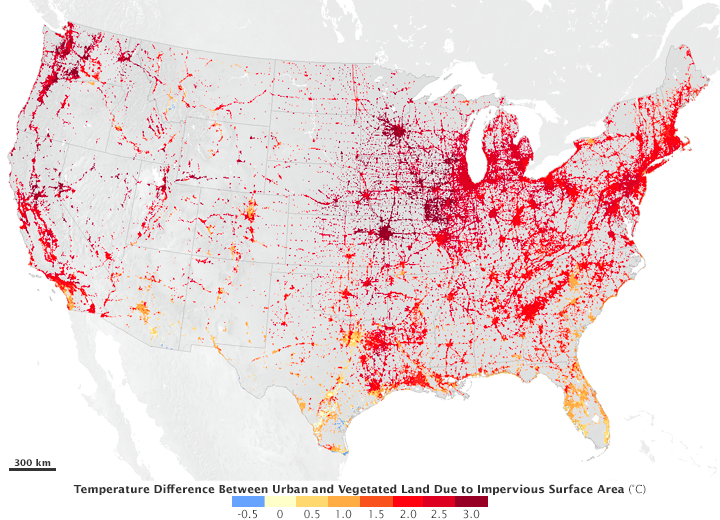
When weather forecasters mention your city's heat island, do you just get the idea of one locale? Here is what those Urban Heat Islands look like: 

The urban heat island effect occurs primarily during the day, when urban impervious surfaces absorb more sunlight than the surrounding vegetated areas. Trees, grasses, and other vegetation naturally cool the air as a by-product of photosynthesis. They release water back into to the atmosphere in a process called evapotranspiration, which cools the local surface temperature in much the same way that sweat cools a person’s skin as it evaporates. Trees with broad leaves, like those found in many deciduous forests on the U.S. East Coast, have more pores to exchange water than trees with needles, and so have more of a cooling effect.
Read the article carefully as there is climate scientist propaganda mixed within the actual science. 

Source: NASA

Saturday, January 24, 2015

The State of the First Amendment: 2014

Staff Writer, R. Patrick Chapman
Bill of Rights / Polls
______________________________________

The State of the First Amendment: 2014 is a report about how Americans view the entire First Amendment, if some of them knew what that was.
When asked to name the five specific freedoms in the First Amendment, 68% of Americans name freedom of speech, followed by 29% who say the freedom of religion, 14% mention the freedom of the press, 7% mention the right to assemble, and 1% name the right to petition. Twenty-nine percent of those surveyed cannot name any of the rights guaranteed by the First Amendment.
Those who could name freedom of speech and freedom of religion increased this year from 59% to 68% and 24% to 29% respectively. Meanwhile, the knowledge of right to petition and right of assembly decreased from 4% to 1% and 11% to 7% respectively. The percentage of Americans who can’t name any First Amendment rights dropped from 36% to 29%.
The deprogramming of life, liberty, and the pursuit of happiness must be working, but to combat this limited perspective, here is the First Amendment:
Congress shall make no law respecting an establishment of religion, or prohibiting the free exercise thereof; or abridging the freedom of speech, or of the press; or the right of the people peaceably to assemble, and to petition the Government for a redress of grievances.
Memorize it, there might be a quiz later.


Source: Newseum, US Constitution

Monday, December 29, 2014

Air Force 2025

Staff Writer, R.Patrick Chapman
Air Force / Weather Modification 
___________________________________


 Welcome to AIR FORCE 2025 future study conducted 1995-1996 for the Air Force Chief of Staff...


Source: Air Force

Monday, October 27, 2014

ICAS Report No. 10a November 1966

Staff Writer, Nathaniel Diaz
Weather Modification / Government
__________________________________


A Report to the Interdepartmental Committee for Atmospheric Sciences (ICAS) by Homer E. Newell – Associate Administrator for Space Science and Applications, NASA, Washington, D.C.
"At its meeting of March 29, 1966 the Fe~dr61 Council askel ICAS
to prepare a report outlining "who is doing what in weather
modification, the future plans of the agencies (particularly
Commerce and Interior) and their interrelationships, and the
considerations that should affect decisions on the division of
responsibilities for research in weather modification."
Source: NASA

Sunday, October 26, 2014

A Recommended National Program In Weather Modification, July 1965

Staff Writer, Nathaniel Diaz
Weather Modification / Government
___________________________________

Another document this time from NASA.gov detailing weather modification in a government report.


A Report to the
Interdepartmental Committee for
Atmospheric Sciences
Homer E. Newell
bY
Associate Administrator for Space Science and Application
National Aeronautics Si Space Administration
Washington, D.C.
Interdepartmental Committee
for
Atmospheric Sciences

Source: NASA

Weather Modification: The Evolution of an R&D Program into a Military Operation

Staff Writer, Nathaniel Diaz
Weather Modification / Military
__________________________________

Read the paper and review its 120 references and notes:


Here are some highlighted quotes: 
A portion of the United States Navy program in weather modification
is devoted to the logistic and flight support of the joint N 0 A AI
Navy research program on hurricane modification (Project Stormfury).
In addition, it supports studies of cloud and fog dissipation and
the development of pyrotechnic seeding devices. The Office of Naval
Research has for many years supported several basic research programs·
in atmospheric electricity, some of which are relevant to the
possibility of artificially modifying lightning from thunderstorms.
The United States Army is involved in studies of fog dissipation,
atmospheric electricity, and convective cloud dynamics.
The United States Air Force is similarly interested in the dynamics
of convective cloud systems that affect the flight of aircraft and
missiles and the dissipation of fogs and low stratus clouds. It has
also participated in Project Stormfury. During the course of this
study, no attempt was made by the Panel to examine classified
experimental programs or to ascertain the existence of classified
experimental programs in weather modification.
Project Stormfury? Could this also be a reason for Hurricanes Katrina and Sandy that displayed uncharacteristic behaviors and made landfall in high populated areas of the United States? Also how California is in extreme drought with perceptible systems avoiding this state?
Public attention in connection
with military usage was also rapid and set a pattern of extravagant and
fanciful images of power and danger that would continue for twenty years:
Army, Navy and Air Force are spending close to a million dollars
a year on weather modificatin and their tremendous interest
suggests that military applications extend far beyond visiting
a few showers upon an enemy. It does not require a sharp mind
to figure out that wartime storms might readily be infected with
virulent bacteriological and radiological substances. (14) 
Is this the reason for certain viral "outbreaks," bacterial "epidemics," and the prevalence of Morgellons disease?
Orville also reported that the USSR
'" had conducted numerous unpublicized but still detectable
experiments apparently aimed at finding ways to speed melting
of polar icecaps; and has even offered to join the United
States in a project to turn the Arctic Ocean into a sort of
warm water lake by melting the polar icecap.
So Global Warming and Climate Change have nothing to do with icecap melting? As with any large scale weather modification how can there be Global Warming or Climate Change if militaries and countries are messing with the ionosphere?
Moreover, ones own research was innocent, while a similar ~
claim on the part of the antagonist was "largely propagandistic," a
theme which would also be retained for many years.
"Officials say current Pentagon research ... is limited to rainmaking,
rain suppression, and hail and fog dispersal. The latter
is useful in controlling flying weather ... The Soviets claim
their weather research is only for peaceful purposes - a claim
the Pentagon calls 'largely propagandistic'. A spokesman says
the Soviets are conducting extensive work on weather alteration
which could be used in military operations." (26)
Yet the Pentagon and other official government source call people who reference their work, take photographic evidence of chemical trails in the sky, and notice the unnatural weather patterns in the last few decades as Conspiracy Theorist. Isn't that propaganda too? 
In 1963 Adm. William F. Raborn J
previously responsable for the Polaris SLBM development program and then
Deputy Chief of Naval Operations for Development, included the following
description in an article titled IINew Horizons of Naval Research and
Developmentll
The possibilities for the military employment of the II wea ther
weapon ll may be as di verse as they are numerous. An abi 1 ity to
control the weather could introduce greater changes in warfare
than those which occurred in 1945 with the explosion of the
first nuclear weapons.
A severe storm or hurricane striking a naval force may well
inflict greater damage than could an enemy. The capability to
change the direction of destructive storms and guide them toward
enemy concentrations may exist in the future arsenal of the naval
tactical dommander.
Ground, sea, air, and amphibious operations might be supported
by the dissipation of fog or clouds, or by the production of
rain or drought. Conversely, the creation of solid, lowovercasts
might be used to conceal troop concentrations, movements,
and task force deployments. Large-scale weather control techniques
might be used to cause extensive flooding in strategic
areas or even to bring a new "iceagell upon the enemy. By
influencing the ionosphere and atmosphere simultaneously,
magnetic,acoustic, and pressure effects might be generated in
such a way that oceanwide sweeping of mines would occur.
We already have taken our first steps toward developing an
environmental warfare capability. We are using satellite weather
data from Tiros II for current, tactical operations and more
accurate, long-range weather predictions. Some experiments in
fog dissipation have shown promise, and some exploratory research
has been conducted on ways to change the heading of major storms.
For these reasons -- and because our advances in science make
it reasonable -- we are now engaged in planning a ten-year,
comprehensive study of the atmosphere, a stu~y which we will
designate ATMOS. This plan will be coordinated with our TENOC
oceanographic studies. (31)
Did the military admit that its weather modification capabilities are far more extensive use for weather modification than is realized by most Americans?
A 1972 statement by USAF  Gen. Robert T. March was a good deal more
restrained.
Lastly, contributions of military R&D to weather research will
focus on what might be the least appreciated of all the disciplines.
Military R&D programs in meteorology include weather observing and
forecasting, weather-data processing and dissemination, meteorological
equipment development, computerized flight planning, atmospheric
research, the Standard Atmosphere, and fog dissemination. These
topics will be reviewed and discussed in terms of both present and
future inputs. (341·
So the government and its defense contractors create, predict, and modify the weather? 
Dr. Robert W.White, Administrator of the National Oceanic and Atmospheric
Administration:
"It is not possiole to draw-clear distinctions between research and
technological development on weatlier modification for hostile and
non-hostile purposes." (35)
Dr. Thomas F.Malone, Chairman, National Academy of Sciences Review Panel
on Weather and Climate Modification:
"I do not think military research should be explicitly prohibited
because (a) it is almost impossible to differentiate between
research directed at beneficial use and research directed at
fashioning geophysical weaponry; (b) our national civilian
effort in this field would be seriously disrupted because we
freely intermingle military and civilian resources; and (c)
our military forces must have expert scientific competence to
fulfill their role in providing national security." (36)
Did NOAA admit that civilians are not involved because the military best keeps its secrets? 

This document is a fascinating report on what weather modification, how long it has been used and studied as well as its implications for creating the Global Warming, Climate Change scams.


Source: FAS

Monday, July 7, 2014

Bilderberg: How a Few People Rule the World

Staff Writer, Nicole Meyer-Greene
Bilderberg / Corporate Governance
___________________________________

The study of how a few people can rule the world is published as The Network of Global Corporate Control


Still believe think tanks and groups like Bilderberg are innocuous?


Source: Business Insider

Friday, January 24, 2014

Be Very Quiet... You're Plants May Be Watching You

Staff Writer, DL Mullan
Science / Biology
_____________________________

Do plants know? remember? or think?

Plants may not have brains but they have an electrical network that may be a decentralized form of memory.
Mimosa pudica is known as the Sensitive plant or a touch-me-not. Dr Monica Gagliano from the University of Western Australia and her colleagues designed their experiments as if Mimosa was indeed an animal.

They trained Mimosa‘s short- and long-term memories under both high and low-light environments by repeatedly dropping water on them using a custom-designed apparatus.
The team goes on to explain that: 
“Astonishingly, Mimosa can display the learned response even when left undisturbed in a more favorable environment for a month. This relatively long-lasting learned behavioral change as a result of previous experience matches the persistence of habituation effects observed in many animals,” the biologists wrote in a paper published online in the journal Oecologia.

“Plants may lack brains and neural tissues but they do possess a sophisticated calcium-based signally network in their cells similar to animals’ memory processes,” they explained.
So the next time you are out in your garden you may want to talk and visit with your plants, they may be able to remember you. 


Source: Sci News